
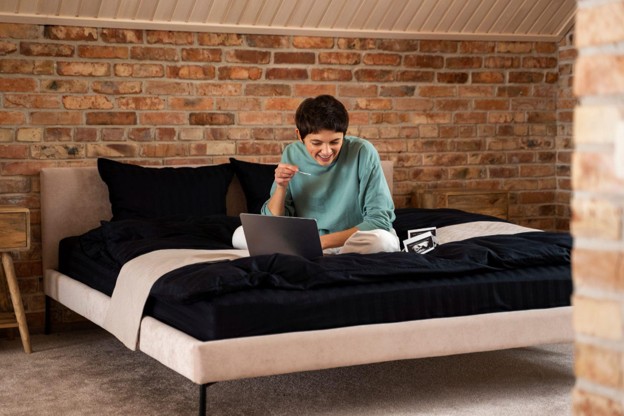
Compact living does not necessarily require every activity to happen in the same room. Renters exploring 1-bedroom apartments in University City may find that a separate bedroom creates valuable boundaries between sleeping, working, entertaining, and relaxing, even when the overall residence remains relatively efficient in size.
Square footage is important when comparing apartments, but the way that space is divided can matter just as much. A one-bedroom layout creates two distinct primary living zones rather than asking for one open room to accommodate nearly every part of daily life.
That separation can change how a smaller apartment functions and feels.
A Bedroom Gives Different Parts of the Day Their Own Space
Studio living requires one primary room to perform several jobs. The same area may serve as a bedroom, living room, dining space, and workspace.
That arrangement can work well for renters who prioritize efficiency. Others may prefer stronger separation between activities.
A one-bedroom apartment creates a natural dividing line. The bedroom can remain primarily associated with sleep and privacy, while the living area handles activities such as eating, watching television, reading, entertaining, or working.
For renters comparing 1-bedroom apartments in University City, this distinction can be more meaningful than simply gaining additional square footage.
The Linden currently offers multiple one-bedroom configurations. Its residences page describes standard one-bedroom, one-bath layouts ranging from approximately 542 to 685 square feet, while its floor-plan portal also lists a larger one-bedroom duplex configuration.
The value of these layouts lies not only in their dimensions but also in how the available space can be used for different purposes.
Physical Separation Can Make Work and Rest Easier to Distinguish
Hybrid and remote work have changed what many renters need from their homes.
A dining table or living-room corner may occasionally become a desk. When the workday ends, however, having somewhere else to retreat can make the home feel less like a permanent office.
A separate bedroom allows residents to keep at least one part of the apartment removed from everyday work activity.
That can be especially useful for professionals or graduate students whose schedules include substantial time at home. Rather than seeing a workstation immediately upon waking, residents can maintain a clearer physical boundary between their sleeping and daytime spaces.
People touring 1-bedroom apartments in University City should therefore consider where a desk could realistically fit and how the rest of the apartment would function when that workspace is in use.
A floor plan that supports different activities without requiring constant furniture rearrangement can make compact living considerably more practical.
One-Bedroom Apartments in University City: Renters Should Be Evaluated by Usable Space
Raw square footage cannot reveal everything about an apartment.
Two residences with similar dimensions can function very differently depending on their layout. Hallways, closet placement, window locations, kitchen configuration, and room proportions all influence how much of the floor area residents can actually use.
When comparing 1-bedroom apartments in University City, renters can ask practical questions such as
- Is there a logical place for a sofa and television?
- Can the living area accommodate a small dining or work surface?
- Does the bedroom fit the desired bed size comfortably?
- Is there enough storage to prevent clutter from spreading into living areas?
- Can doors and closets open without interfering with furniture?
- Does natural light reach the areas used most frequently?
- Can the resident move comfortably between rooms?
Thinking in terms of usable space can provide a more realistic picture than selecting an apartment based solely on the largest number of square feet.
Storage Helps Preserve the Separation Between Rooms
A separate bedroom loses some of its advantage if belongings constantly overflow into the living area.
Storage therefore plays an important role in making a smaller residence work.
Clothing, luggage, seasonal belongings, cleaning supplies, work equipment, and everyday household items all need somewhere to go. When storage is limited, surfaces and floor space can gradually become substitutes for closets.
That makes an apartment feel smaller regardless of its actual dimensions.
The Linden lists walk-in closets among its standard residence features, alongside in-unit washers and dryers, smart-home features, stainless-steel appliances, and floor-to-ceiling windows.
For people evaluating 1-bedroom apartments in University City, built-in storage can help keep the bedroom and living room functioning as intended instead of becoming general-purpose storage areas.
Natural Light Can Influence How Compact Rooms Feel
Walls create useful separation, but renters may worry that dividing an apartment into rooms will make it feel closed in.
Windows can make a significant difference.
Natural light can visually open a room and make individual spaces feel more inviting throughout the day. Window placement can also influence where residents put desks, seating, plants, and other furniture.
The Linden identifies floor-to-ceiling windows as a standard feature across its residences and describes its layouts as designed to maximize space and natural light.
When touring 1-bedroom apartments in University City, renters may want to look beyond the floor plan diagram and consider how the apartment actually feels during daylight hours.
The relationship between windows, room dimensions, and furniture placement can substantially affect the experience of a compact home.
Entertaining Becomes Easier When the Bedroom Stays Private
Living alone does not necessarily mean living without visitors.
Friends may stop by for dinner. Family might visit. Coworkers or classmates may occasionally come over. A partner may spend time at the apartment.
A separate bedroom allows the living room to function as a genuinely social area without turning the sleeping area into part of the gathering.
That distinction can make a small apartment feel more like a complete home.
Residents can leave personal belongings in the bedroom, close the door, and use the living space for visitors. There is less pressure to make a sleeping area presentable every time someone comes over.
For renters considering 1-bedroom apartments in University City, this arrangement can be an important lifestyle difference between a studio and a one-bedroom residence even when the difference in total square footage appears modest.
In-Unit Laundry Can Make Independent Living More Convenient
How an apartment functions depends on more than room count.
Routine household tasks also influence whether living alone feels convenient or unnecessarily complicated.
Laundry is a prime example.
Having a washer and dryer inside the residence allows someone to handle laundry around work, school, exercise, and other commitments rather than planning around a communal laundry room or traveling elsewhere.
The Linden includes in-unit washers and dryers among its standard residence features.
For someone comparing 1-bedroom apartments in University City, features like in-unit laundry may not affect the floor plan visually, but they can have a noticeable effect on everyday routines.
Efficiency is comparing 1-bedroom homes with fewer square feet. It is about reducing the amount of effort required to use the home comfortably.
The Building Can Extend Beyond the Apartment
Another way to think about compact living is to consider what does not need to happen inside the residence.
A renter may want somewhere to work without putting a large office setup in the living room. Exercise equipment may take up valuable floor space. Hosting a larger gathering may be difficult in a one-bedroom apartment regardless of how efficiently it is arranged.
Shared building amenities can provide alternatives.
The Linden lists a coworking space, conference room, fitness center, yoga room, lounge, game room, and rooftop deck among its community amenities.
This means residents can maintain a private home while using other parts of the property for activities that would otherwise compete for space inside the apartment.
For those exploring 1-bedroom apartments in University City, it can therefore be useful to evaluate the building as well as the individual unit.
The apartment does not necessarily need to contain a full office, gym, meeting room, and entertainment space when suitable shared facilities are available elsewhere.
A Separate Bedroom Can Support Better Sleep Habits
One of the simplest advantages of a separate bedroom is that the room can remain primarily associated with rest.
The Centers for Disease Control and Prevention recommends maintaining a comfortable, quiet sleeping environment and following consistent sleep habits as part of healthy sleep practices. The CDC’s sleep guidance provides additional information about healthy sleep and its importance to overall well-being.
A separate bedroom cannot guarantee better sleep, but it can make it easier to create an environment intended primarily for winding down rather than one that must simultaneously function as a living room and workspace.
Residents can also make choices about lighting, electronics, temperature, and organization, specifically around how they prefer to sleep.
For people who regularly study or work at home, this physical distinction may be particularly useful.
Furniture Should Fit the Life Being Lived
Apartment hunters sometimes evaluate empty rooms without thinking through the furniture they actually own or plan to buy.
A one-bedroom layout should be considered in relation to everyday belongings.
Before choosing a residence, renters can think about:
- Bed size.
- Sofa dimensions.
- Desk requirements.
- Dining preferences.
- Television placement.
- Bookshelves or storage furniture.
- Exercise equipment.
- Pet supplies.
- Space needed for hobbies.
Someone who works remotely several days each week may prioritize a comfortable desk location. Someone who frequently entertains may care more about living-room seating. Another renter may want enough bedroom space for additional storage.
Comparing 1-bedroom apartments in University City according to these actual routines can be more useful than deciding which floor plan looks largest on paper.
Smaller Does Not Have to Mean Everything Happens Together
Choosing an efficient apartment involves tradeoffs, but compact living does not necessarily require sacrificing boundaries between different parts of life.
A separate bedroom can provide privacy, preserve a dedicated sleeping environment, make entertaining easier, and prevent work or study areas from taking over every part of the home.
Storage, natural light, in-unit laundry, and community amenities can further influence how efficiently the available space functions.
That is why renters evaluating 1-bedroom apartments in University City should consider more than square footage alone. The more useful question is how well the layout supports the way they expect to live from morning until night.
A thoughtfully divided residence can make relatively modest square footage feel more functional because each part of the home has a clearer purpose. For renters who value the efficiency of a smaller apartment but still want meaningful separation between sleeping and everyday living, that single bedroom door can make a surprisingly significant difference.